Roof Leak Water Damage in Anaheim, CA
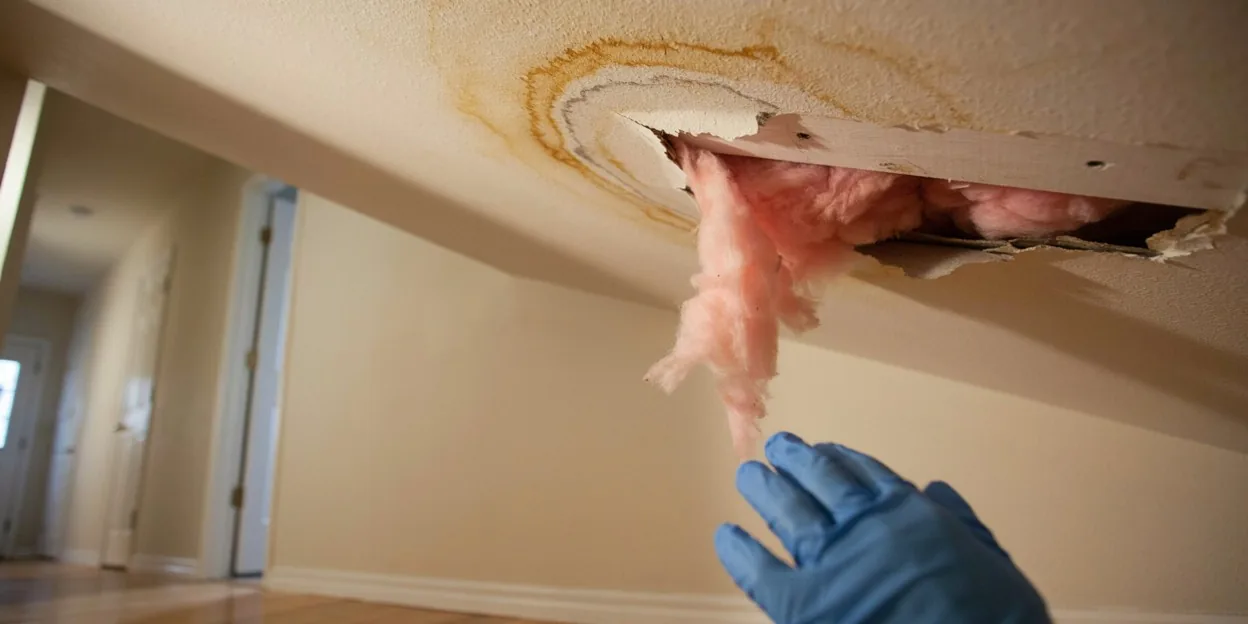
The February storm came in sideways off the ocean for two days, and on the second night a brown ring showed up on the bedroom ceiling and grew by the hour. By morning the paint had a blister the size of a dinner plate with water in it, and the attic insulation above it was a wet gray mat. This site puts you through to an independent local provider who dries out roof leaks in Anaheim and across north Orange County.
The stain is downhill of the hole
Water on a roof travels. It gets in at a cracked concrete tile, a lifted shingle, or a flashing that pulled away from the chimney, runs down the underlayment and along a rafter, and drops onto the ceiling drywall somewhere downhill of the entry point. The stain in the bedroom may be ten feet from the hole. The crew goes into the attic with a flashlight and a meter, follows the wet trail on the rafters and the top of the ceiling back to the source, and marks it so the roofer fixes the right spot.
Then they meter the ceiling drywall around the stain, the top plates of the walls below it, and the drywall down those walls, because water that ran along a top plate drips into the wall cavity and shows up as a swollen baseboard a week later.
Catch the drip, pull the power, and stay out from under the blister
Put a bucket under the drip and move the furniture out from under the stain. If the ceiling has a blister holding water, push a screwdriver through the low point into the bucket so the water drains instead of the ceiling coming down in a sheet. Turn off the breaker for any light fixture or fan in that ceiling. Do not go up on a wet tile roof; if you can see the damage from the yard, photograph it. Call a roofer for a tarp and call here for the inside, and the two can be on the way at the same time.
Bagging the insulation and opening the ceiling where it sags
Blown or batt insulation that got wet comes out of the attic in bags; it will not dry in place and it holds water against the ceiling drywall below. The ceiling is opened at the stain so the cavity above can dry and so a soaked sheet does not fall on its own. Ceiling drywall that only got damp at the edge of the stain often dries in place. Wall drywall below a wet top plate is metered and either dried through holes behind the baseboard or cut, depending on the numbers. Then structural drying runs the attic, the ceiling, and the walls down to dry on the meter before the roofer's permanent repair closes the roof and the drywall goes back.
If the stain is on a ceiling under an upstairs bathroom rather than under the attic, the leak is plumbing, not rain. That is a different search, and leak detection is the service for it.
Low-pitched ranch roofs, cracked tile, and a December reckoning
Anaheim gets about fourteen inches of rain in an ordinary year and nearly all of it between December and March, often in two or three atmospheric river storms that bring wind with the water. The 1950s and 1960s ranches in the flat part of town have low-pitched roofs, many of them re-roofed two or three times, with composition shingle or rolled roofing over the original and plenty of places for wind-driven rain to get under. The two-story homes in Anaheim Hills from the 1970s on mostly carry concrete tile, which lasts for decades but cracks when someone walks on it to clean the gutters or service the air conditioner, and the underlayment beneath it wears out long before the tile does.
The Santa Ana winds in the fall lift tiles and shingles and tear flashing loose, and nobody notices until the first real storm in December. Rooftop air conditioning units and the solar racks that have gone up on so many north county roofs since the 2010s add penetrations, and every penetration is a flashing that can fail.
A California homeowners policy usually pays for the inside damage from a sudden roof leak during a storm, and usually does not pay for the roof itself if it was worn out. This site cannot read your policy and promises nothing about it. Photograph the ceiling, the attic, and the roof from the ground before the roofer tarps it, and have the crew log the readings from the first visit.
Calling about a ceiling stain that grew overnight
Say where the stain is, whether it is still dripping, whether the roof has been tarped, and whether the attic insulation is wet. Mention any light fixture or fan in that ceiling. Have the street address and a callback number ready before you dial. Call (657) 239-3689.