Water Damage Restoration in Downtown Anaheim, CA
Downtown Anaheim is the few blocks around Center Street and Anaheim Boulevard that were the commercial heart of the Colony for a century, lost most of their old storefronts to redevelopment in the 1970s and 1980s, and have been rebuilt since the 2000s as mixed-use blocks: apartments and lofts over restaurants along the Center Street Promenade, with the 1919 citrus packing house on Anaheim Boulevard reopened as a food hall in 2014 and the bungalows of the Colony starting one street over.
Two kinds of building share these blocks. The new ones are wood-framed apartments over concrete podiums, where a leak on one floor becomes a ceiling on the next. The old ones are brick and bungalow, with raised floors, crawl spaces, and plumbing that was replaced piece by piece over a hundred years.
This site connects downtown residents, owners, and property managers with an independent local water damage provider by phone. The provider meters the unit and the ones around it and documents what belongs to whom.
Downtown Anaheim water damage in a loft, a bungalow, or a brick storefront
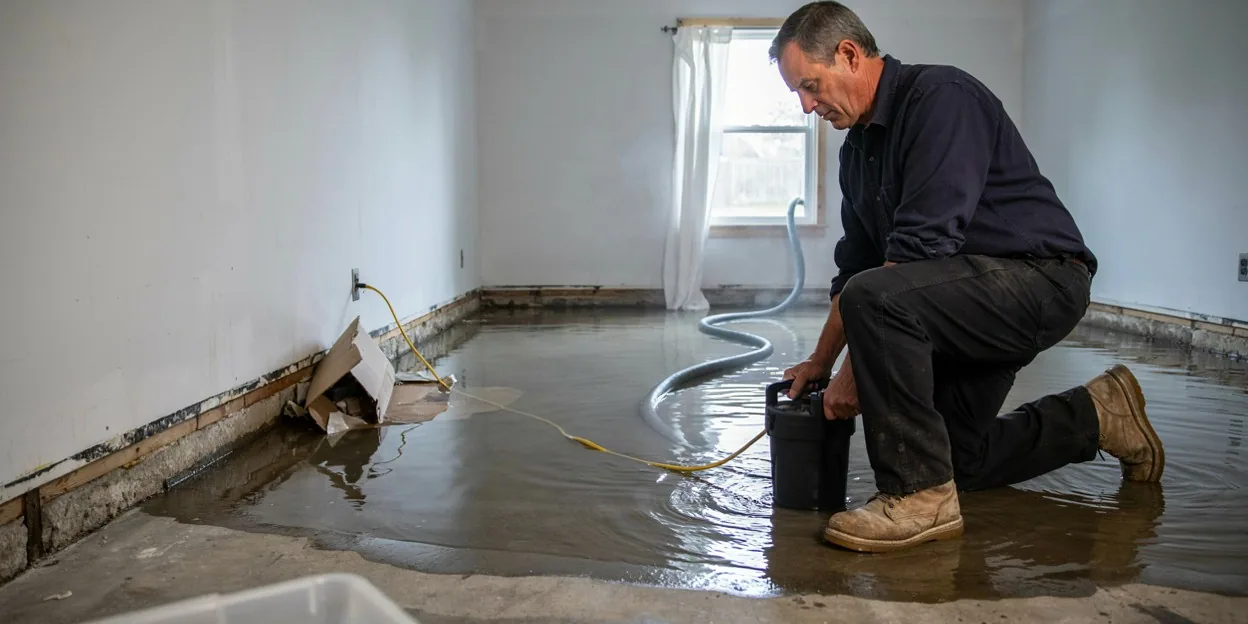
A washer hose that let go in a third-floor apartment and dripped into the restaurant below is a water extraction call with two tenants and an association in the loop. A 1920s bungalow a block off Center with a soft floor and a musty crawl space is leak detection under the house. A century-old cast-iron drain that backed up into a ground-floor unit is sewer backup cleanup.
The packing house, the promenade, and the permit counter
The Anaheim Packing District is the anchor of the rebuilt downtown, a 1919 Sunkist packing house turned into a food hall beside a park and the old Packard dealership, and it is a fair picture of how much of the district is old shell with new interior. Rebuild permits go through the City of Anaheim's building counter a few blocks away at City Hall, and a contributing historic building gets a planning review as well.
Call (657) 239-3689 and say which floor and which building. An independent local water damage provider serving downtown Anaheim picks it up from there.
Services Available in Downtown Anaheim
Water Extraction
Standing water pulled off tile, carpet pad, and the concrete slab under them, followed by the first meter readings at every wall base.
Structural Drying
Air movers and dehumidifiers run against daily readings until slab, studs, and drywall come back to dry in a closed-up Anaheim house.
Leak Detection
The warm tile, the spinning meter, and the damp carpet traced to a pipe under the slab or inside a wall before anyone opens concrete.
Slab Leak Cleanup
Cleanup after hard water pitted a copper line under the slab, with the soaked flooring, cabinet bases, and lower drywall dried or removed.
Winter Storm Flood Cleanup
Mud and street water pumped out of a garage or living room after an atmospheric river, and everything it touched sorted for drying or disposal.
Water Heater Leak Cleanup
Drying after a tank in the garage or a hallway closet let go, including the drywall behind the stand and the rooms on the other side of it.
Sewer Backup Cleanup
Removal of water that came up through a shower drain or toilet from an aging cast-iron line, with contaminated flooring and drywall handled as such.
Roof Leak Water Damage
Attic insulation, ceilings, and walls dried after wind-driven winter rain found a cracked tile or a failed flashing on a north county roof.